EVENTS ARCHIVE 2015
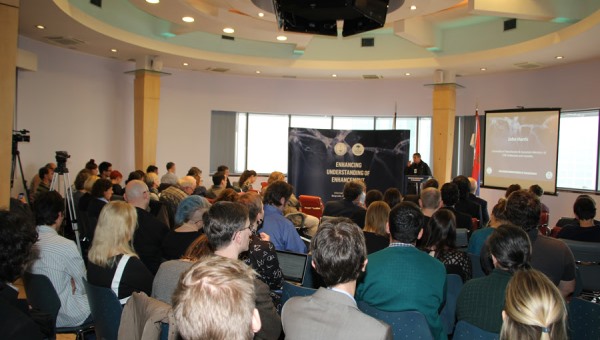
Panel discussions on thursday





Rare Diseases and the challenge of providing adequate healthcare
On 24 December CSB organized the lecture "Rare Diseases and the challenge of providing adequate healthcare". The lecturers were dr Marta Sjeničić (Institute of Social Sciences, Belgrade) and dr Marko Milenković (Institute of Social Sciences, Belgrade). Tanja Komnenović moderated the lecture.

Is the patient always right?
On 17 December CSB organized the lecture "Is the patient always right?". The lecturer was Lada Zibar, MD, PhD, Professor at the Faculty of Medicine at Josip Juraj Štrosmajer University of Osijek. Stefan Mićić moderated the lecture.

Political, ethical and socio-cultural aspects of breastfeeding: lactivism and its critiques
On 10 December CSB organized the lecture "Political, ethical and socio-cultural aspects of breastfeeding: lactivism and its critiques". The lecturer was dr Suzana Ignjatović, Institute of Social Sciences, Belgrade. Danilo Polić moderated the lecture.

What is the Human and What is Crisis?
On 3 December CSB organized the lecture "What is the Human and What is Crisis?". The lecturer was Professor Vladeta Jerotić, member of the Serbian Academy of Sciences and Arts. Professor Vojin Rakić moderated the lecture.

Breast-feeding and intelligence: facts, causes and open questions
On 26 November CSB organized the lecture "Breast-feeding and intelligence: facts, causes and open questions". The lecturer was dr Željka Buturović, Institute of Social Sciences, Belgrade. Dr Dragoljub Kaurin moderated the lecture.

Evolvability as an Evolved Ability: Biospheric Selection, the Gaia Hypothesis and Panspermia
On 19 November CSB organized the lecture "Evolvability as an Evolved Ability: Biospheric Selection, the Gaia Hypothesis and Panspermia". The lecturers were Professor Milan Ćirković (Regular Member of the Center for the Study of Bioethics, Astronomical Observatory of Belgrade) and dr Srđa Janković (University Children's Hospital, Belgrade). Tanja Komnenović moderated the lecture.

Ethical Aspects of Suicide
On 12 November CSB organized the lecture "Ethical Aspects of Suicide". The lecturer was Professor Gordana Dedić, Medical Faculty, Military Medical Academy, Belgrade University. Dejan Pejović moderated the lecture.

Euthanasia
On 5 November CSB organized the lecture "Euthanasia". The lecturer was Assistant Professor Rastko Jović, Faculty of Orthodox Theology, Belgrade University. Dejan Pejović moderated the lecture.

Genetic Enhancement and the Egalitarian Ethos
On 31 October CSB organized the lecture "Genetic Enhancement and the Egalitarian Ethos". The lecturer was Oliver Feeney, PhD, National University of Ireland, Galway (NUIG). Professor Dušanka Krajnović moderated the lecture that was followed by a lively discussion.

Cognitive Enhancements in Avatar Based Schizophrenia Therapy
On 30 October CSB organized the lecture "Cognitive Enhancements in Avatar Based Schizophrenia Therapy". The lecturer was Alexander Gerner, PhD, the Centre of Philosophy of Science at the Science Faculty of the University of Lisbon (CFCUL). Natalija Trivić moderated the lecture.
Narratives and images of illness and care
On 26 October CSB organized the lecture "Narratives and images of illness and care". The lecturer was Lucia Galvagni, PhD, researcher at the Bruno Kessler Foundation, Trento (Italy). Professor Dušanka Krajnović moderated the lecture.

Enhancing the brain: Are there reasons to worry?
On 26 October CSB organized the lecture "Enhancing the brain: Are there reasons to worry?". The lecturer was Salvör Nordal, PhD, Director of the Centre for Ethics at the University of Iceland. Professor Dušanka Krajnović moderated the lecture.

Legal Aspects of Organ Donation Euthanasia
On 22 October CSB organized the lecture "Legal Aspects of Organ Donation Euthanasia". The lecturer was Professor Violeta Beširević, Faculty of Law, Union University, Belgrade. Milica Milašinović moderated the lecture.

Neurological basis of morality
On 15 October CSB organized the lecture "Neurological basis of morality". The lecturer was dr Jelena R. Dačković, Institute for Neurology, Clinical Center of Serbia. Tanja Komnenović moderated the lecture.

Bioethics Between Psychotherapy and Pharmacotherapy
On 8 October CSB organized the lecture "Bioethics Between Psychotherapy and Pharmacotherapy". The lecturer was dr Srđa Zlopaša, psychiatrist at the Institute for Psychiatry of the University of Belgrade. Stefan Mićić moderated the lecture that was followed by a long discussion.

Ethical dilemmas raised by early announcement of embryonic anomalies and child's gender to the parents
On 1 October 2015 CSB organized the lecture "Ethical dilemmas raised by early announcement of embryonic anomalies and child's gender to the parents". The lecturer was Miroslava Gojnić-Dugalić, Professor of Gynecology and Obstetrics at the Faculty of Medicine, University of Belgrade. Danilo Polić acted as a moderator of the lecture that was followed by a lively discussion.

Zvonko Magić: “Bioethical Activities of the Council of Europe”
On 21 May,CSB organized the lecture “Bioethical Activities of the Council of Europe”. The lecturer was Zvonko Magić from the Council of Europe and the Military Medical Academy in Belgrade. Olivera Mijušković, the Program Coordinator of CSB, was tasked with moderating the lecture. The lecture has been followed by a vivid discussion.

Vladislav Stefanović: “Plagiarism in science”
On 14 May, CSB organized the lecture “Plagiarism in Science”. The lecturer was Academician Vladislav Stefanović from the Serbian Academy of Sciences and Arts. Professor Rakić opened the lecture while Dr Dragoljub Kaurin was tasked with moderating the lecture. The lecture has been followed by a vivid discussion and participants shared their views and experience on the issue of plagiarism in science. Books on bioethics were distributed as presents to lecture attendees.

Marta Sjeničić: “Legal and Ethical Issues Within the Context of Personalized Medicine”
On 7 May,the Center for the Study of Bioethics organized the lecture “Legal and Ethical Issues Within
the Context of Personalized Medicine”. Dr Marta Sjeničićfrom the Institute of Social Sciences
delivered the lecture. Questions and a discussion followed her talk.

Dušanka Krajnović: „Scientific Research Ethics and Publications: What is Plagiarism and how to Recognize it?“
On 30 April,Assistant ProfessorDušanka Krajnovićfrom the Faculty of Pharmacy of the University of Belgrade delivered the lecture „Scientific Research Ethics and Publications: What is Plagiarism and how to Recognize it?“

“Autonomy and Care in Pediatric and Geriatric Ethics”
On 23 April,Assistant Professor Ivan Vuković from the Faculty of Philosophy of the Univerrsity of Belgrade gave the lecture“Autonomy and Care in Pediatric and Geriatric Ethics”.

Valentina Marinković: “Clinical Research, Regulatory and Moral Challenges”
On 9 April, Professor Valentina Marinković from the Faculty of Pharmacy of the Univerrsity of Belgrade held the lecture: “Clinical Research, Regulatory and Moral Challenges”
Milica Prostran: “Substitution Drugs – Ethical Aspects”
On 2 April, Professor Milica Prostran from the Facultyl of Medicine of the University of Belgrade gave the lecture “Substitution Drugs – Ethical Aspects”

Marina Stamenković-Radak: “Genetic Research and Article 16 of UNESCO’s Declaration of Human Rights and Bioethics: Defence of Future Generations”
On 26 March, Professor Marina Stamenković-Radak from the Faculty of Biology of the University of Belgrade held the lecture“Genetic Research and Article 16 of UNESCO’s Declaration of Human Rights and Bioethics: Defence of Future Generations”

Zorica Mršević: „The Understanding of Violence“
On 19 March, Professor Zorica Mršević from the Institute of Social Sciences delivered the lecture „The Understanding of Violence“.

Katarina Zeljić“:“Why is it important that we do well, from the researcher’s perspective (Ethics of Scientific Research)”?
On 12 March,Assistant Professor Katarina Zeljić from the Faculty of Biology of the University of Belgrade gave the lecture “Why is it important that we do well, from the researcher’s perspective (Ethics of Scientific Research)”?

Adopting Zoja's Law
The Center for the Study of Bioethics organized in partnership with the Center for Legal Research of the Institute of Social Sciences the debate "Adopting Zoja's Law".
The National Assembly of the Republic of Serbia recently adopted a law on the prevention and diagnosis of genetic diseases, genetic anomalies and rare diseases, commonly known as “Zoja's Law”.
Zoja's Law caused a great deal of attention in the Serbian public. It is named after the girl Zoja, who died from a rare disease (Batten Disease). This law provides the possibility that children from Serbia suffering from genetically caused diseases and anomalies or rare diseases can obtain suitable treatment abroad. If doctors cannot find a proper diagnosis within six months, they are obliged to send samples of tissue and blood to clinics outside Serbia. This is to be funded by the Serbian state.
Zoja's Law gained unanimous support from the MPs. Zoja's law is sometimes referred to as to the “Law of victory of life” (“Zoe” means “life”). Still, certain aspects of this law were a matter of controversy. They were debated at this CSB gathering.
People who participated in the meeting had a lead role in the adoption of Zoja`s Law:
Hajrija Mujovic Zornic, PhD, Principal Research Fellow of the Institute of Social Sciences, one of the authors of the law
Bojana Mirosavljevic, mother of Zoja
Professor Dusan Milisavljevic, PhD, MP who proposed Zoja`s Law to Parliament
During the debate, Professor Dusan Milisavljevic and a group of geneticists who had certain reservations about the Law, agreed to meet in order to draft by-laws that could help in overcoming them.

Gallery
BIOETHICS IN REGENERATIVE MEDICINE - A CHALLENGE FOR THE 21ST CENTURY
On 19 February 2015 the Center for the Study of Bioethics organized in partnership with the Institute for Social Sciences and the Serbian Unit of the UNESCO Chair in Bioethics a lecture by Professor Amira Fazlagić: "Bioethics in regenerative medicine - a challenge for the 21st century". Amira Fazlagić is President of the National Association for the Promotion and Development of Regenerative Medicine, as well as Advisor for Medical Affairs of Europe's largest stem cell bank Cryo-Save. She is a Regular Member of the Center for the Study of Bioethics and General Secretary of the Serbian Unit of the UNESCO Chair in Bioethics.
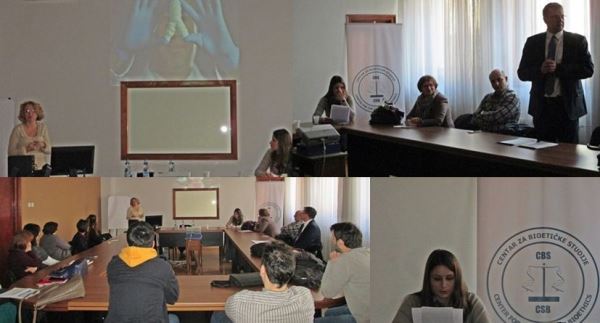
MORAL ENHANCEMENT AND SEROTONIN
On 5 February 2015 the Center for the Study of Bioethics organized in partnership with the Institute for Social Sciences a lecture by Professor Aleksandrar Damjanovic: "Moral Enhancement and Serotonin." Aleksandar Damjanovic is a Professor of Psychiatry at the School of Medicine of the University of Belgrade, Director of the Institute for Psychiatry of the Clinical Center of Serbia, Regular Member of the Center for the Study of Bioethics, Assistant Director of the Serbian Unit of the UNESCO Chair in Bioethics (in charge of bioethics education), member of the Cambridge Working Group for Bioethics Education in Serbia and the President of the National Commission for Mental Health.

THE FOLLOWING LECTURES AND SEMINARS WERE ORGANIZED BY CSB BETWEEN 1 NOVEMBER 2012 AND 1 JANUAR 2014:
GENDER VARIATIONS – ACKNOWLEDGING THE LEGAL CONSEQUENCES OF SEX CHANGE IN SERBIA
Members of the Center for the Study of Bioethics, the Cambridge Working Group for Bioethics Education in Serbia, the Serbian Unit of the UNESCO Chair in Bioethics and the Center for the Development of Liberalism organized on 2 December 2013 a lecture by Professor Jelena Simic, titled "Gender Variation - Recognizing Legal Consequences of 'Sex Change' in Serbia". During her lecture, Jelena Simic defended the standpoint that new anthropological and historical studies of gender relations, especially since the 1990s, have shown that the dychotomous gender/sex system is not universal and that around the world and in different periods of time there are different cultural responses to the fact that some people do not fit into this binary division, i.e. that they transcend the usual categories of male and female.
MORAL ENHANCEMENT AND FREEDOM
On 29 November 2013, the Belgrade Gallery "Ozon" hosted the event "Moral Enhancement of People and Freedom". It was organized by the Cambridge Working Group for Bioethics Education in Serbia / Center for the Study of Bioethics and the Center for the Promotion of Science. Participants were Professor Vojin Rakić and Professor Aleksandar Damjanović, as well as the popular musician "Rambo Amadeus".
OBSERVATION SELECTION EFFECTS AND GLOBAL RISKS
Members of the Center for the Study of Bioethics, the Cambridge Working Group for Bioethics Education in Serbia, the Serbian Unit of the UNESCO Chair in Bioethics and the Center for the Development of Liberalism hosted the lecture "Observation Selection Effects and Global Risks" by Professor Milan Ćirković. The lecture took place on 14 November 2013.
Aleksandar Damjanović
On the Philosophy of Suicide – A Psychiatrist’s Perspective
17 April 2013
Abstract
Philosophical responses to the question of the legitimacy of suicide range between voluntarism and dogmatic theories based on religious prohibition. The lecture includes a deliberation on the prevention of suicide on the basis of classifying suicide as an autonomous or a non-autonomous act. The author considers the phenomenon of paternalism with its ethical consequences as a possible approach to suicide prevention. The work includes the deliberation of various aspects of treatment and prevention of suicide, and gives a blueprint of the definition of philosophical suicide. The author also discusses the operational criteria which could be used as a basis to define philosophical suicide as a clinical entity. The author illustrates his lecture with a number of examples from literature, philosophy and art that he found helpful in the construction of philosophical suicide.
Key words: suicide, philosophy, prevention
Biography
Aleksandar Damjanović, PhD, is an Associate Professor of the Medical School of the University of Belgrade, lecturing on psychiatry. He is an active member of the Serbian Medical Society (SMS), Serbian Association of Psychiatrists. He is also the President of the Psychiatric section of SMS, member of the Drug Agency of the Republic of Serbia, the Board of Editors of the Engrami journal, the Bioethical Society of Serbia, and of the Association of Writers of Serbia. He was a member of the state sub-committee for the selection of drugs to the positive list in the area of CNS in the period between 2002 and 2005, and was a member of the state committee for the evaluation of induced abortions of advanced pregnancies in the period between 2000 and 2010. He has published over 200 bibliographical units at home and abroad. He has also published the following books: Meta-theoretical Psychiatric Experiments (2004), Psycho and Patho-biographies – Construction, Reconstruction or Deconstruction of Personality (2005), Growing Shadow of Darkness – Vivisection of the Psychological Motives of the Horror Genre in Film and Literature (2006), Psychological and Philosophical Ounces, A Guide Through the Apocalypse (2008) and On Mind and Body (2012). Delirium and its Divine Emissary (2009) was his first book of poetry.
Presentation of the book by Veselin Mitrović
The Outstep of Bioethics: New Biotechnologies and Social Aspects of “Enchancement” of the Healthy
10 April 2013
Moderator: Vojin Rakić
Participants:
Marija Bogdanović
Jovan Babić
Nada Sekulić
Veselin Mitrović
Abstract
The breakthrough development of biomedical science and technology since the middle of the 20th century has initiated new moral and social questions that arise from the means of using these advances on healthy people. In order to better understand the consequences of such developments, this book analyzes the use of new biotechnologies (Human enchancement technologies - HET) aimed at “enchancing” healthy people.
The first part of the book analyzes the pro et contra argumentation of three theoretical currents: the tranhumanist, whose representatives openly advocate genetic, prosthetic and cognitive enchancement of the human species – the transition of the human into the posthuman society; the bioconservative, whose representatives see a threat in undermining human dignity, meddling into “Divine affairs” and in changing the nature of the human being; the representatives of the middle current hold that the danger lies in the dialectics of the relation between “capitalism and medicine”. The authors of the middle current view the approachability and use of biotechnology as a resource for the betterment of social positions.
Through the analysis of arguments and positions within the aforementioned currents, the book faces the incoming need for researchers to also focus on researching the instruments of moral enhancement. Thus, for example, the critical analysis of the stances of Nicholas Agar reveals the importance of disgust towards certain actions in the prevention and protection of human life, which is why we reject Agar’s equalization of ability to feel disgust and moral responsibility. The demythologization of the so-called moral disgust is gaining particular importance nowadays in the debates on moral enhancement and the instruments that could prevent massive destruction of the human species. Apart from that, the analysis of Savulescu’s stances heralds his personal moral transition from the moral duty to enhance posterity with the help of genetic engineering to the duty to morally enhance people who might abuse new technologies.
The second part analyzes enhancement technologies that arise from several scientific fields and that are used both on the inside and on the outside of the human body. This analysis creates the possibility of moving along the scientific-theoretical axis, while also giving insight into the ethics of goals and possibilities within the technologies themselves.
The improvement of the quality of life is almost unquestionably accepted as one of society’s paramount values. Hence, the third part of the book had to analyze the socio-cultural consequences of such interventions.
Biography
Veselin Mitrović, PhD, works as a Research Assistant at the Institute for Sociological Studies of the Faculty of Philosophy, University of Belgrade. He is involved in a research project on the reproductive rights of women and deals with the issues of genetic engineering and in vitro fertilization. He has cooperated on the following research projects of the Faculty of Philosophy’s Department of Sociology: Postmodernism and Contemporary Anthropology, Cultural Sociology, Sociology of Mass Culture, Traditional and the Modern in Culture. He has also cooperated on the course “Bioethics” of the Department of Philosophy.
His doctoral thesis “The Social Aspects of “Enhancing” Human Beings within the Rim of New Biotechnical Studies” (2011) problematizes the social aspects of genetic interventions, as well as the possible consequences of scientifically based genetic interventions within developed societies. These problems introduce the issue of the non-ethical use of various enhancement technologies. Other than that that, the issues of the relation between ethics, technology and social values, authenticity and identity, as well as the dialectics of the relation between medicine and capitalism are also introduced. Apart from the book The Outstep of Bioethics, Veselin Mitrović has also published several articles in scientific journals and has been involved in a number of domestic and international scientific gatherings dealing with relevant topics: the use of bio-medical interventions on healthy people with the goal of creating an enhanced species.
Sandra Radenović
Bioethical education and the reduction of stereotypes and prejudices – the example of the visit to non-hygienic Roma settlements
3 April 2013
Abstract
As part of the program on the Department for Humanistic Sciences of the University of Belgrade’s Medical School, visits to the non-hygienic Roma settlements were organized. The goal of these visits was to realize direct contacts between students and the members of Roma population, so that future doctors could face their own stereotypes and prejudices that could be an impediment in developing high quality doctor-patient relations before actually confronting the patients who are members of the Roma population. In her presentation, the author explains some of the data regarding ethnic stereotypes and prejudices of the student population, as well as the findings RE health care and health problems of the Roma population – data acquired during the aforementioned organized visits to the non-hygienic Roma settlements.
Biography
Sandra S. Radenović was born in Belgrade in 1974. She graduated in 2004 and obtained her Master’s degree from the University of Belgrade’s Faculty of Philosophy, Department of Sociology in 2007 (sociology of inter-ethnical relations). Sandra Radenović defended her doctoral thesis “Doctor-Patient Relations within the Paradigm of Integrative Bioethics” in 2011, at the University of Belgrade’s Faculty of Philosophy, Department of Sociology. This is a pioneering work within the domestic scientific community in the area of bioethics, medical sociology and medical ethics. Sandra Radenović has worked at the Department for Humanistic Sciences of the University of Belgrade’s Medical School since 2006. She also works as a TA, teaching in English at the University of Belgrade’s Medical School. She is a member of the Governing Board of the Bioethical Society of Serbia (BSS) and is one of its founders and. Since 2011 she is Vice-President of the BSS. She is a researcher on a project on rare diseases of the Serbian Ministry of Science and Technology. She is the author of a number of works in the area of sociology of inter-ethnic studies, medical sociology and bioethics, and was s a participant at a number of domestic and international conferences. Sandra was the coordinator of the international conference The 6. Bioethical forum for South-Eastern Europe named “Bioethics-Medicine-Politics” (Belgrade, Serbia, 11.4.-11.7.2010). She is the author of books “Forms of Racism in Serbia after the 5th October Overthrow (2001-2006)” and “Bioethics and Medicine: Doctor-Patient Relations within the Paradigm of Integrative Bioethics” (Akademska knjiga,Novi Sad, 2012).
Ayesha Ahmad
Should we erase trauma memories?
5 March 2013
Abstract: Should we erase trauma memories?
In this lecture, I discuss ethical issues surrounding the possibility of the erasure or deletion of trauma evoking memories. Contemporary psychiatric practice and advancements in neuro-ethics are providing greater insight and detail into the nature of our memory and the effects of psychological trauma on our well-being. Since the Vietnam war, the diagnostic category of Post Traumatic Stress Disorder (PTSD) has led to the pathologicalisation of trauma and given atrocities such as disasters, humanitarian crisis', and war, our societies face trauma on both a collective and individual scale. However, the experience of trauma is most typically constructed as an individual phenomenon - as a pathological burden affecting our self and our identity of who we want to be. Thus, appeals to a 'cure' or remedy for traumatic experiences are both topical and controversial since the retrieval of our memories is often thought to constitute a defining part of who we are.
To explore the debate, I will present on the nature of trauma, and whether there are virtues in trauma for our human - existential - experience. This is particularly pertinent when there are political ramifications for remembering and/ or forgetting a trauma, and that there could be a functional element to the recognition of trauma as a way of forming a legacy.
I will then introduce some of the potential modifications to our memory that modern pharmacology and neuroscience can offer to the trauma victim. I will contrast and relativize against other therapeutic methods for trauma such as prayer and community support. Then, I will argue, primarily, that a trauma is unable to be isolated on an individual level, and furthermore, that the erasure of trauma memories does not constitute an enhancement of our potential of whom we can become as persons - rather it inhibits our awareness and responsibility.
Biography
Currently, I am teaching at University College London, U.K. at the Medical School.
My background is in Philosophy, and my PhD was entitled 'Metaphysics in Scientific Medicine: The Making of the Human Embryo'. I specialize in medical ethics, and am a member of the Clinical Ethics Committee at Great Ormond Street Hospital. Primarily, I am interested in cultural values in medicine, and this is a strand I develop as part of an international research collaboration funded project on disaster and humanitarian medicine ethics. I have given invited lectures to the International Committee of Military Medicine in Switzerland and the Africa Health Congress in South Africa. I have a research link to South Africa.
In parallel, I studied Psychoanalysis at post-graduate level and specialized in trauma, particularly effects of war and torture. I have published on the phenomenology of trauma, and also combine with ethics, in particular, cross-cultural applicability of PTSD and ethical issues surrounding the medical/psychiatric examination of torture victims.
My areas of interest are cultural values and religious beliefs in medical ethics, clinical ethics committees, pediatric and neonatal ethics.
Andreas Poltermann
Medically Assisted Dignified Death
27 March 2013
Abstract
Unlike active euthanasia (killing on request) which the majority of the population would not forbid but also does not support, many people in Germany declared themselves in favor of the possibility of medical participation in the voluntarily chosen suicide. Also, a third of the German medical professionals can imagine their participation under certain circumstances. What is so interesting regarding the debate on the medically guided and supported suicide, is the fact that it leads the way out of the ideological controversy between self-determination on the one hand, and the religious interpretations of creation and life as a gift, on the other, and opens up the view to the actual goal of the debates on the “freedom to die“: the improvement of the medical, as a rule palliative, care of dying patients in a trustworthy dialogue-based relationship toward caretaker, doctor and family member/caregiver. It is my conviction that the freedom to die can and should be realized as self-determination in a dialogue.
Biography
Andreas Poltermann: Director Belgrade Office, Heinrich BoellStiftung. Before that he was Director Division of Political Education of Heinrich Boell Foundation, Berlin. Heinrich Boell Foundation is the German Political Foundation which is closely affiliated to the German Greens. He studied German Literature, History, Philosophy and Political Science at Göttingen University. After earning his doctoral degree with a book on Immanuel Kant’s Philosophy of Law in 1984, he was member of the National Research Center on Literary Translation at Göttingen University from 1985 to 1994. Since then he is working at Heinrich Boell Foundation.
Discussion of the books Bioethics and The Horizon of Bioethics
27 February 2013

Bioethics, ed.Vojin Rakić, Rada Drezgić, Ivan Mladenović, Belgrade: Institute for Philosophy and Social Theory
The Horizon of Bioethics: Morality in the Age of the Technical Reproduction of Life, ed.Rada Drezgić, Željko Radinković, Predrag Krstić. Belgrade: Institute for Philosophy and Social Theory.
As part of the project “Bioethical Aspects: Morally Acceptable Within the Biotechnologically and Socially Possible”, the Center for the Study of Bioethics and Institute for Philosophy and Social Theory have undertaken the pioneering work of establishing referential readings in the field of bioethics. The texts in Bioethics were collected with the intention of being a “reader” that offers staple examples and enables rational discussion on a broad spectrum of topics that this field encompasses. The collection of domestic works The Horizon of Bioethics deals with the same themes – life, death, enhancement, the normal and aberrations, medical ethics, the consequences of biotechnical improvement etc. – providing insight into the character and range of opinions from several perspectives.
Dubravka Vejnović
The Concept of Race and Ethical Aspects of Human Population Studies
24 December 2012
Abstract
The goal of this lecture is to encourage consideration regarding the problem of dividing human population into races and to clarify whether the concept of race is justified from a biological and genetic aspect. Also, we will consider the justification of using racial qualification as a parameter in biomedical studies. How do safeguard science from “scientific racism”? Is it realistic to expect the emergence of genetic testing for forensic purposes that would enable the determination of “racial qualification” and ethnic qualification of persons suspected of crimes and what would be the consequences of the application of such methods? These are some of the questions that will be given specific attention.
Biography
DubravkaVejnović was born in Belgrade. After graduating from the mathematical-natural sciences oriented high school, she takes up studies of molecular biology and physiology (applied genetics) at the University of Belgrade’s Biology School, while also doing humanitarian work and working as a lournalist. She currently works at the Center for Promotion of Science as a senior research assistant for the preparation of projects and program activities. She is a second year student of the School of Biology doctoral studies.
Voin Milevski
Should we Accept Abortion After Birth?
17 December 2012
Abstract
The text written by Francesca Minerva and Alberto Giubilini “After-birth-abortion: why should the baby live?” has, since its first publication this year, caused enormous interest and, in many cases, disapproval of the public. This is entirely understandable as the authors present several controversial claims. Firstly, they start from the fact that serious fetal abnormalities, as well as the risk for the woman’s physical and psychological health often lead to entirely valid causes for abortion. However, what if these circumstances (i.e. the ones that justify abortion) appear only after the baby is born? Can the arguments that are used to justify the killing of a fetus also be consistently applied in the case of killing a newborn? The authors claim that the reasons sufficient for the justification of abortion can also be sufficient to justify “after-birth abortion” – especially in light of the fact that the difference between the moral status of a fetus and a newborn is nonexistent. The goal of the lecture by Voin Milevski is to show that the text by Minerva and Giubilini contains a very interesting and original argumentation. Namely, when the arguments presented by these authors are entirely developed, they show that the praxis we apply is entirely inconsistent. Rather, our intuitions lead us to accept several practices (eg. abortion and euthanasia of highly sick children) - without accepting abortion after birth, although we can’t find any relevant moral reasons for this. Thus, it will be shown that abortion after birth is a consistent option, although it doesn’t have to be accepted.
Biography
Voin Milevski was born in 1982 in Belgrade. He works as a research assistant on the project “Dynamic Systems in Nature and Society: Philosophical and Empirical Aspects”, financed by the Ministry of Sciences of the Republic of Serbia (2011-2014). His areas of interest include bioethics, applied ethics, normative ethics and meta-ethics. He is an associate of the Center for the Study of Bioethics. He publishes articles dealing mainly with meta-ethics and applied ethics.
Rosamond Rhodes
Living Organ Donors: Lessons about Autonomy
7 December 2012
Biography
Rosamond Rhodes, Ph.D., is Professor of Medical Education and Director of Bioethics Education at Mount Sinai School of Medicine where she oversees the medical ethics curriculum for students in all four years of medical school, for house staff in eleven residency programs, for graduate post-doctoral fellows in the biomedical sciences, and for students in the genetics counseling program. She directs a program of faculty medical ethics education and collaborates with faculty members on a variety of research projects. Dr. Rhodes serves as a member of Mount Sinai's Ethics Committee and IACUC. Dr. Rhodes is also Professor of Philosophy at The Graduate Center, CUNY.
Beyond the teaching setting, Dr. Rhodes serves as co-editor of the American Philosophical Association Newsletter on Philosophy and Medicine and on the editorial boards of the international journals Cambridge Quarterly of Healthcare Ethics, Theoretical Medicine and Bioethics, Bioethics, and Clinical Ethics. She has published over 125 articles and chapters on a broad range of issues in bioethics including: professionalism, justice, the doctor-patient relationship, decisional capacity, surrogate decision making, research ethics, physician-assisted suicide, genetics, cloning, abortion, assisted reproduction, organ transplantation, psychiatry, and bioethics education. She also writes on issues in the history of moral and political philosophy.
